Robot AI Lab: From Simulation to Robotics
A project outline combining Unity, robot hardware, ROS 2, and Codex-assisted development.
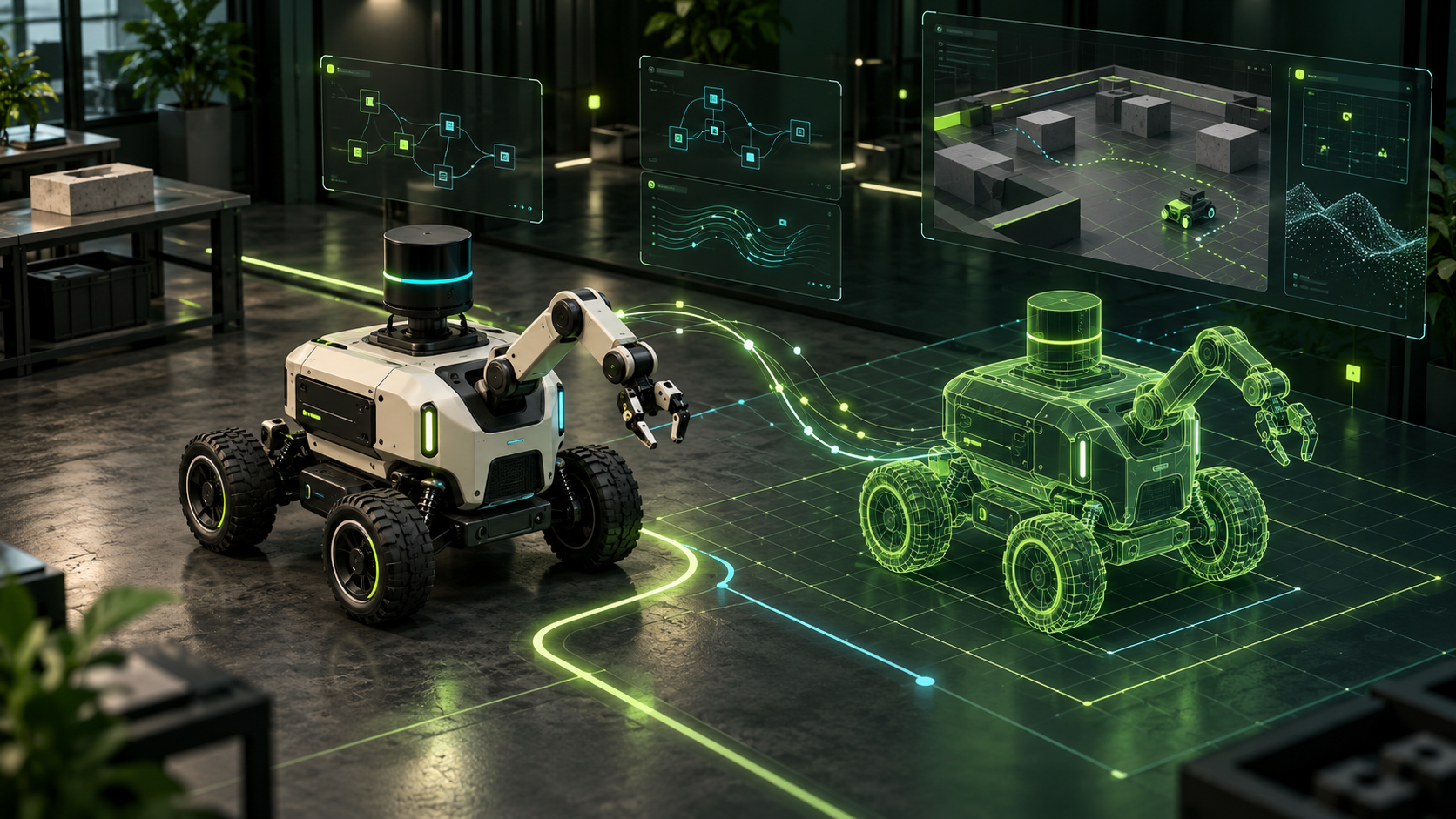
Cover: an original AI-generated concept illustration, not a photograph or a running prototype screenshot.
Robot AI Lab brings together my interest in interactive worlds and robotics. The project direction combines Unity + Robot + ROS 2 + Codex, with the aim of exploring robot behavior in simulation before connecting that work to physical hardware.
Project direction
The proposed workflow starts with a small virtual environment: a robot, a destination, and a few obstacles. The goal is to make the robot’s observations and actions visible, then use that feedback to guide development.
The intended roles are:
- Unity: a virtual environment for visualizing and experimenting with robot behavior.
- Robot: physical hardware for a later stage of testing.
- ROS 2: the planned communication layer between robot components and simulation.
- Codex: assistance with writing, reviewing, and iterating on development code.
First prototype goals
- Create a simple virtual robot and a compact test environment.
- Explore exchanging commands and observations through ROS 2.
- Visualize movement and obstacle interaction inside the simulation.
- Evaluate a hardware connection after the simulation workflow is established.
These are project goals, not a list of completed features. Hardware specifications, implementation milestones, and test results will be added as they are documented.
Visual concept
The illustration pairs a wheeled robot with a wireframe digital twin. The connecting paths represent the project’s simulation-to-hardware direction. It was created specifically for this portfolio; it does not depict an existing robot build or a measured test run.